
Your challenge with linerless labels
When you decide to produce linerless labels in-house, you gain greater control over your product development, material specifications and supply chain. At the same time, you become responsible for all the process steps that determine the performance of your end product.
After all, the success of a linerless label is determined not only by your choice of materials, but also by the process conditions and how these are coordinated. How do you ensure a stable coating process? How do you achieve consistent product quality?
On this page, we discuss the key challenges faced by manufacturers when they develop and produce linerless labels themselves.
The challenges of linerless label production
A perfect balans between release en adhesion
Finding the right balance between release properties and adhesion is one of the biggest challenges in linerless production. A linerless label must unwind effortlessly without any resistance. At the same time, the adhesive layer must ensure the desired adhesion, depending on the application. Even minor deviations in the coating process can lead to quality issues.

Consistent quality at high speeds
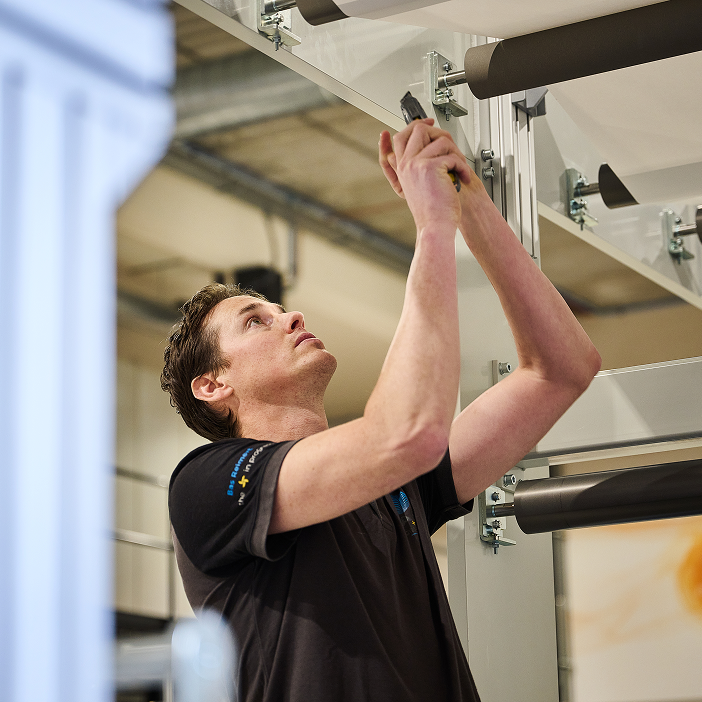
It’s all about maximum output. We understand that better than anyone. At the same time, the quality of the adhesive or silicone coating must not deteriorate when you increase the production speed of your line. This is because variations in the coating pattern can lead to uneven release properties, inconsistent adhesive application and material loss. That is why maximum process control is crucial for a reliable end product, even at high speeds.
After all, every metre of substrate lost due to unstable coatings, rejects or start-up losses has a direct impact on your yield. A controlled coating process helps to reduce losses and increase the production line’s yield.
Why process control makes the difference
High-quality linerless labels begin with a stable coating process. Every step influences the final result:
- The supply of silicone and adhesives
- Application of the silicone coating
- Monitoring release properties
- Precise application of the hot-melt adhesive
- Controlling coating thicknesses
- Ensuring product consistency
When these factors are optimally controlled, the result is a linerless label that performs reliably. From production to application.
How we support you
At Maan Engineering, we understand the challenges of linerless label production. That is why we develop coating technology that gives you maximum control over critical process steps such as silicone coating, hotmelt coating and adhesive conditioning.
Our solutions are designed to:
- Ensure consistent product quality
- Minimise production waste
- Enable high line speeds
- Guarantee process stability
- Support sustainable production
In this way, we help you turn your linerless ambitions into a scalable and profitable production process.
What equipment do you need to produce linerless labels?
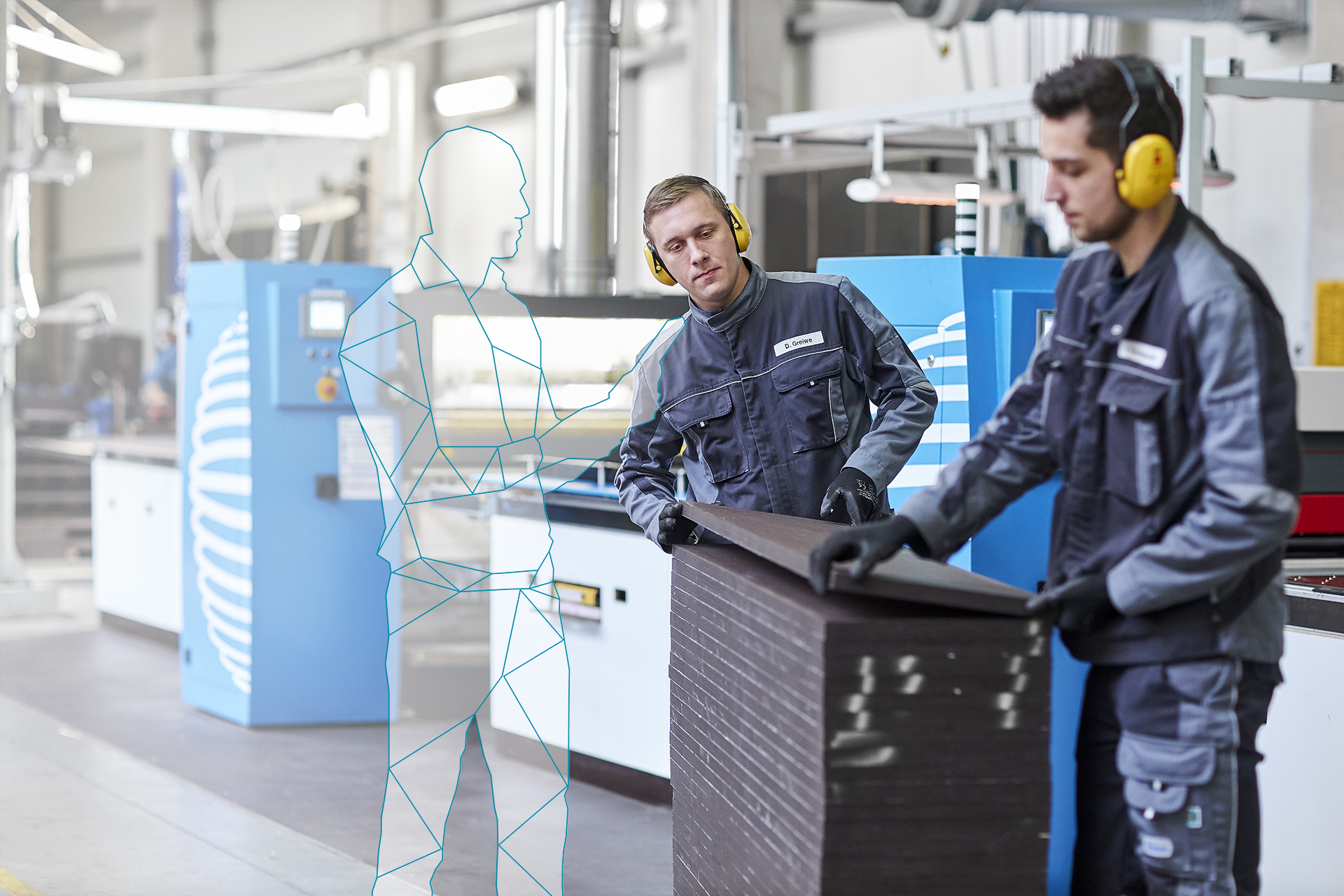
The production of linerless labels requires three essential process steps:
- Melting: Both the process (temperature, viscosity, quality) and the adhesive supply are precisely controlled within the drum or tank melter.
- Silicone coating: For applying an optimal release coating.
- Hotmelt coating: For the precise application of the adhesive layer.
- Converting and application: For processing, printing, and ultimately applying the label.
A stable and reproducible coating process forms the foundation for a successful linerless label. At Maan Engineering, we develop the technology that gives you full control over these critical process steps.

Tell us about your coating aspirations
We'll make it happen!