
Hotmelt coating for flat panel lamination
Do you want to speed up production, achieve higher output and, at the same time, improve the quality of your panels? If so, hotmelt coating is an attractive solution. When you bond panels using hotmelt, they are ready for further processing immediately after bonding.
Hotmelt coating is widely used for bonding a variety of sheet materials and sandwich panels across sectors such as construction, interior design, the automotive industry and the manufacturing sector. Below, you can read how it works and what the benefits are.
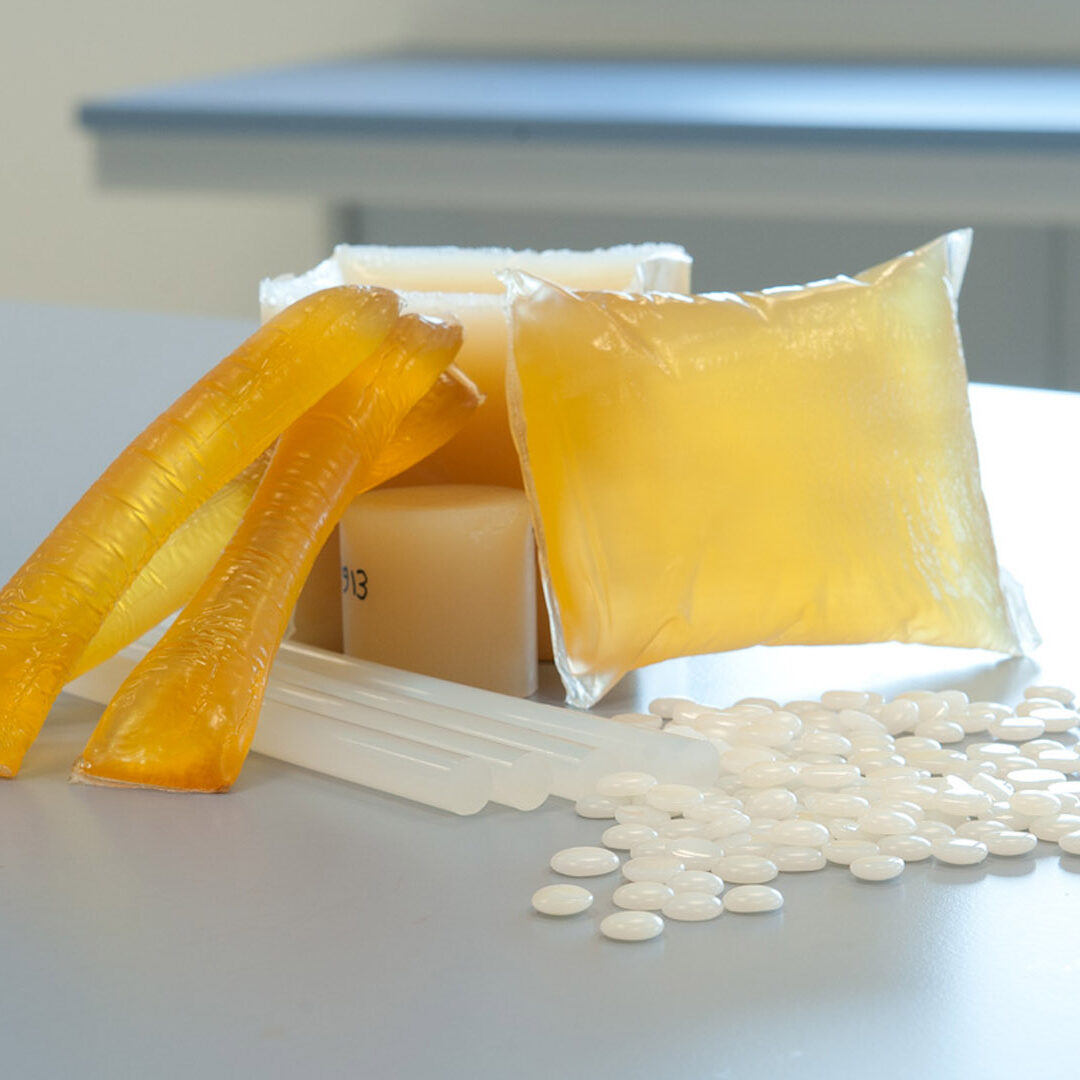
Depending on the performance requirements of your end product, different types of hotmelt adhesives can be used. These range from fast-curing thermoplastic hotmelts and pressure-sensitive adhesives (PSAs) to UV-curable acrylates and reactive PUR hotmelts. Each technology has its own characteristics in terms of adhesion, durability, flexibility and processing. Our coating experts will be happy to help you choose the right adhesive.
Different types of hot-melt
Hotmelt is not a single, uniform type of adhesive. The technologies vary and behave differently during and after application. For example, rubber-based hotmelts are generally pressure-sensitive and retain their adhesive strength after cooling. PUR hotmelts, on the other hand, are moisture-sensitive: after application, they react with moisture to form a cross-linked adhesive layer. EVA hotmelts are non-reactive. They develop their final bond as the adhesive cools and cures.
In summary:
- Hotmelt → rubber-based → pressure-sensitive
- Hotmelt → PUR → moisture-sensitive
- Hotmelt → EVA → non-reactive
PUR hotmelt coating
PUR stands for polyurethane reactive. The adhesive is heated until fluid and applied accurately to the substrate. Cooling creates immediate initial tack. It then reacts with moisture in the air and material, producing a permanent cross-linked bond that resists moisture, temperature changes and long-term loads.
Unlike dispersion adhesives, which need time for water to evaporate, PUR hotmelt achieves high initial tack directly after application. Products can often move immediately to the next step. This supports higher speeds and reduces drying time, press capacity and intermediate storage.
Key benefits
Your challenge
Demand for high-quality panels continues to grow, along with requirements for capacity, product quality and sustainability. Stable bonding depends on accurate process control, consistent adhesive application and the right balance between material, coating weight and line speed.
You need maximum output without losing control of quality. We help you turn that challenge into an efficient, future-ready bonding process.

Surface treatment and handling
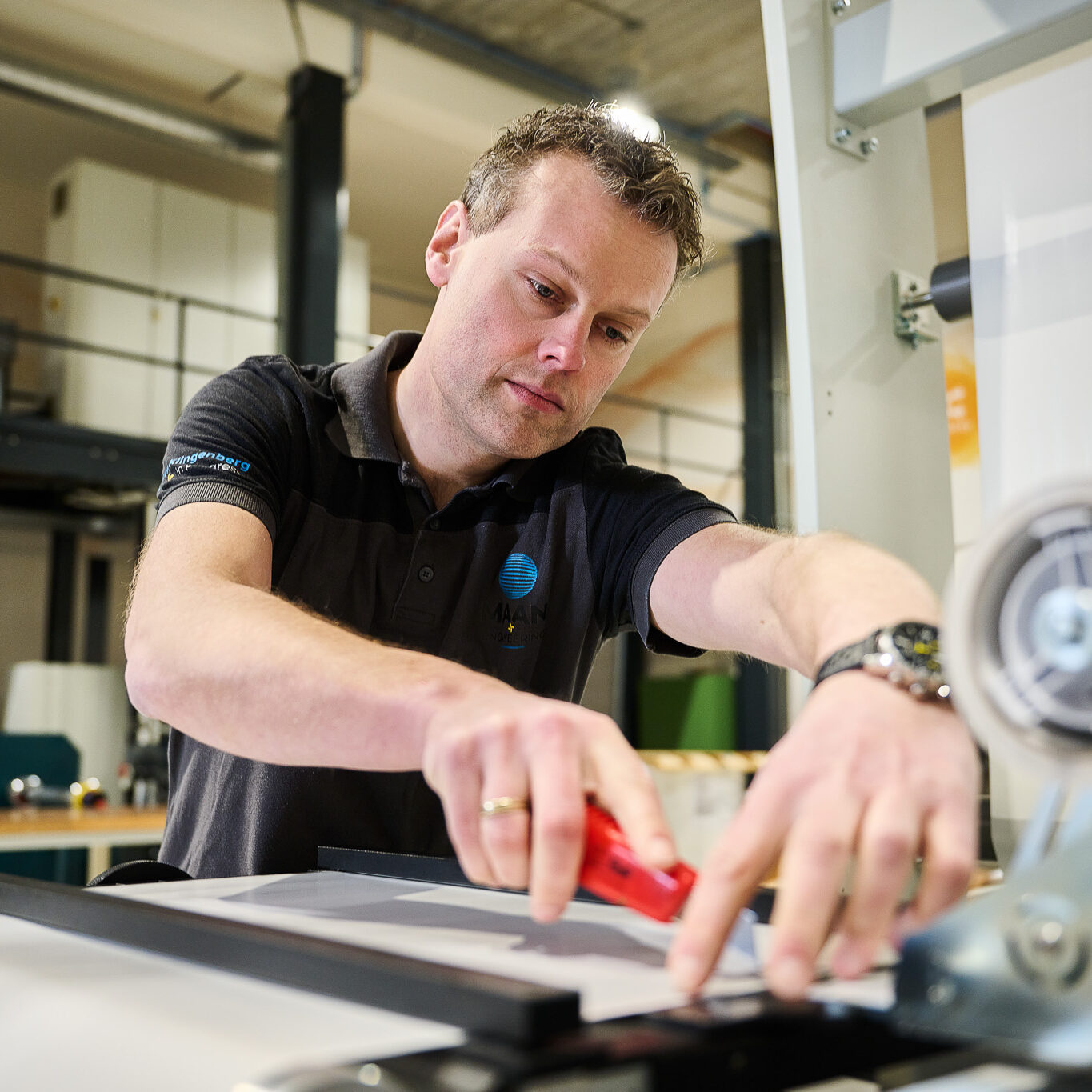
Not all materials are necessarily suitable for all types of bonding. Examples include foams, metals, plastics or composites with low surface tension. Sometimes additional measures are required to achieve a durable bond. These might include brushing, sanding, corona or plasma treatment, or other surface treatments. And you’ll want to be able to integrate these seamlessly into your process. Furthermore, the fact that your panels can be processed immediately opens the door to a fully automated (handling) process.
Would you like to know more about this?

Ask one of our engineers about your hotmelt coating enquiry.
We'll make it happen!
Contact us
Equipment that gets the job done
Roller Coater
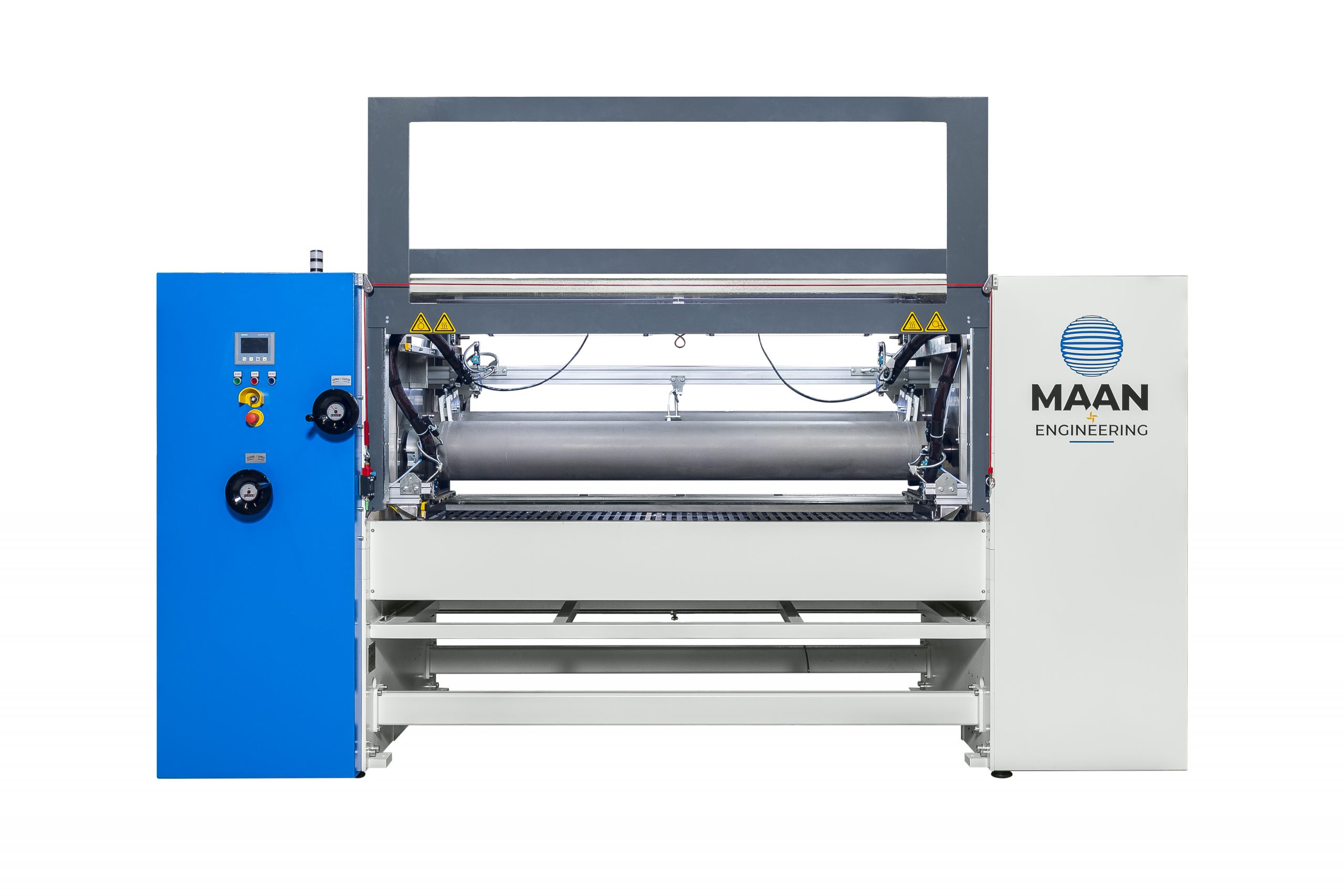
Thanks to the heated rollers of the Maan Roller Coater, you can apply your PUR hotmelt with extreme precision and uniformity to a wide range of flat materials. Precise control of coating weight, temperature and adhesive distribution ensures a consistent coating pattern and reliable bonding. This results in higher product quality and minimal material wastage.
Melting equipment
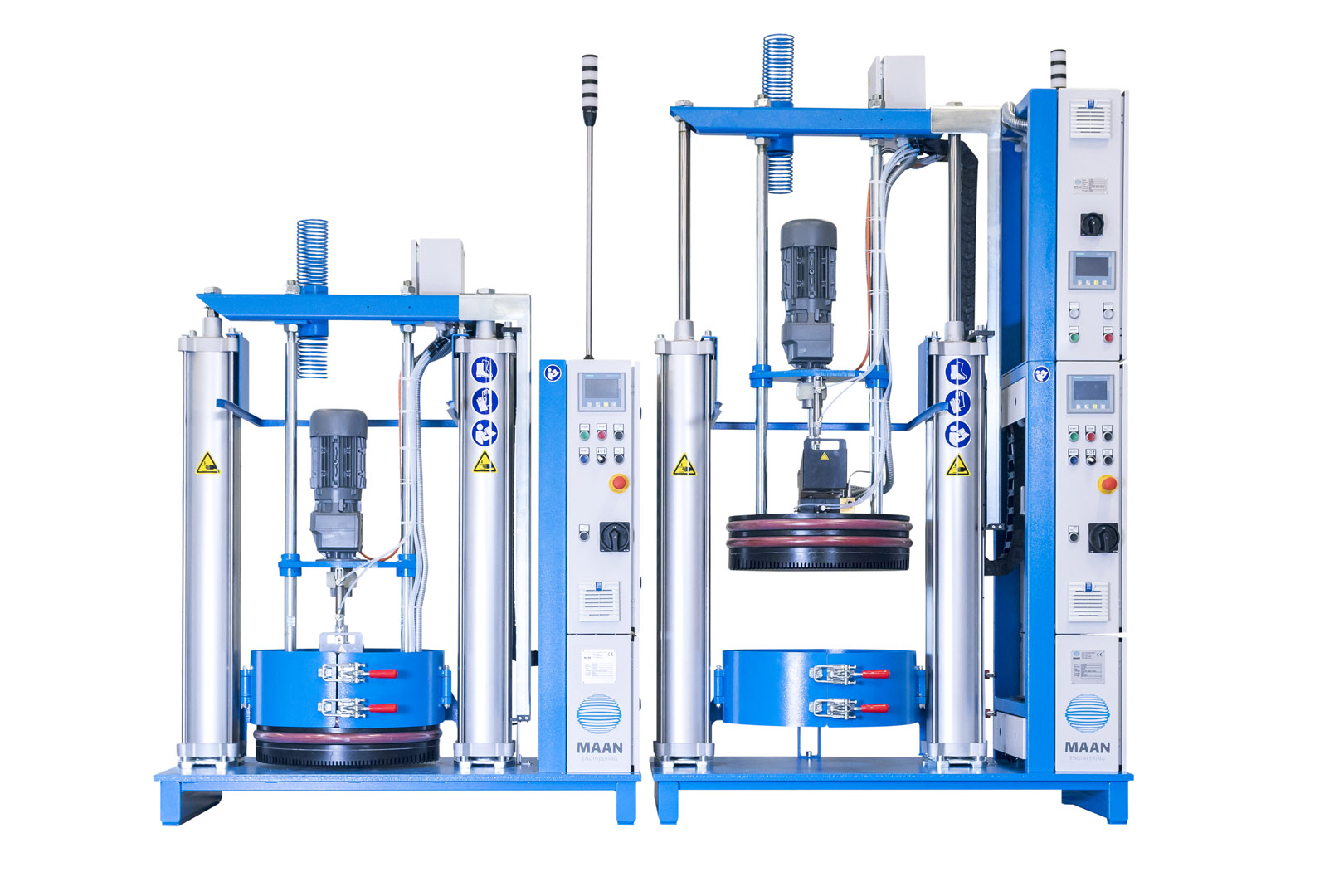
Our melting equipment ensures the controlled melting, conditioning and pumping of PUR hotmelt to the roller coater. Thanks to the closed (top-melted) system, the adhesive remains in optimal condition and contamination is prevented. This contributes to a stable and sustainable process, reduced maintenance and consistent product quality.
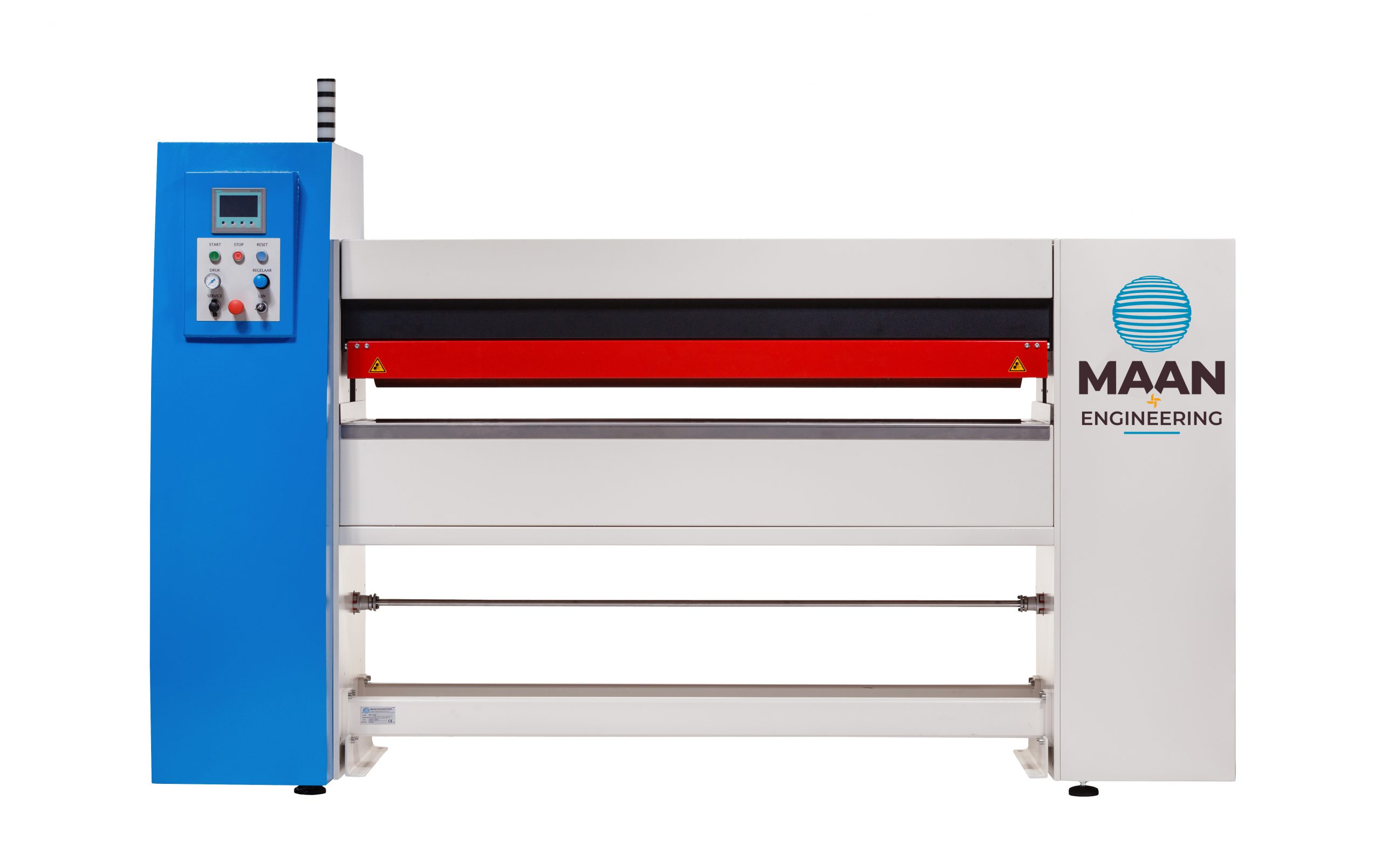
Rotary Laminating Press
The Roller Press ensures the perfect transfer of the PUR hotmelt between the various layers. The even distribution of pressure creates a strong and durable bond across the entire surface of the panel. This forms the basis for high-quality sandwich panels and other laminated products.
About Maan Engineering
At Maan Engineering, we develop coating and lamination solutions that add value to your production process. We do this by prioritising efficiency, manageability and sustainability. Our systems are designed with a focus on maximum output, reliability and consistent product quality.
With our extensive knowledge of PUR hotmelt, surface treatment and flat-panel lamination, we help manufacturers worldwide to optimise their bonding processes. As standard, our equipment is fitted with Remote Access, enabling our engineers to provide remote support whenever required. We do everything we can to help you get the most out of your production!