
Flat panel lamination for construction and insulation panels
Building panels are exposed daily to significant temperature fluctuations, moisture and prolonged stress. The adhesive bond must therefore not only be strong during production, but also continue to function reliably in practice for many years.
At the same time, as a manufacturer, you are looking for ways to increase your production capacity, further automate your processes and reduce the cost per panel. PUR hotmelt helps to combine these objectives.
Why use PUR hotmelt for construction panels?
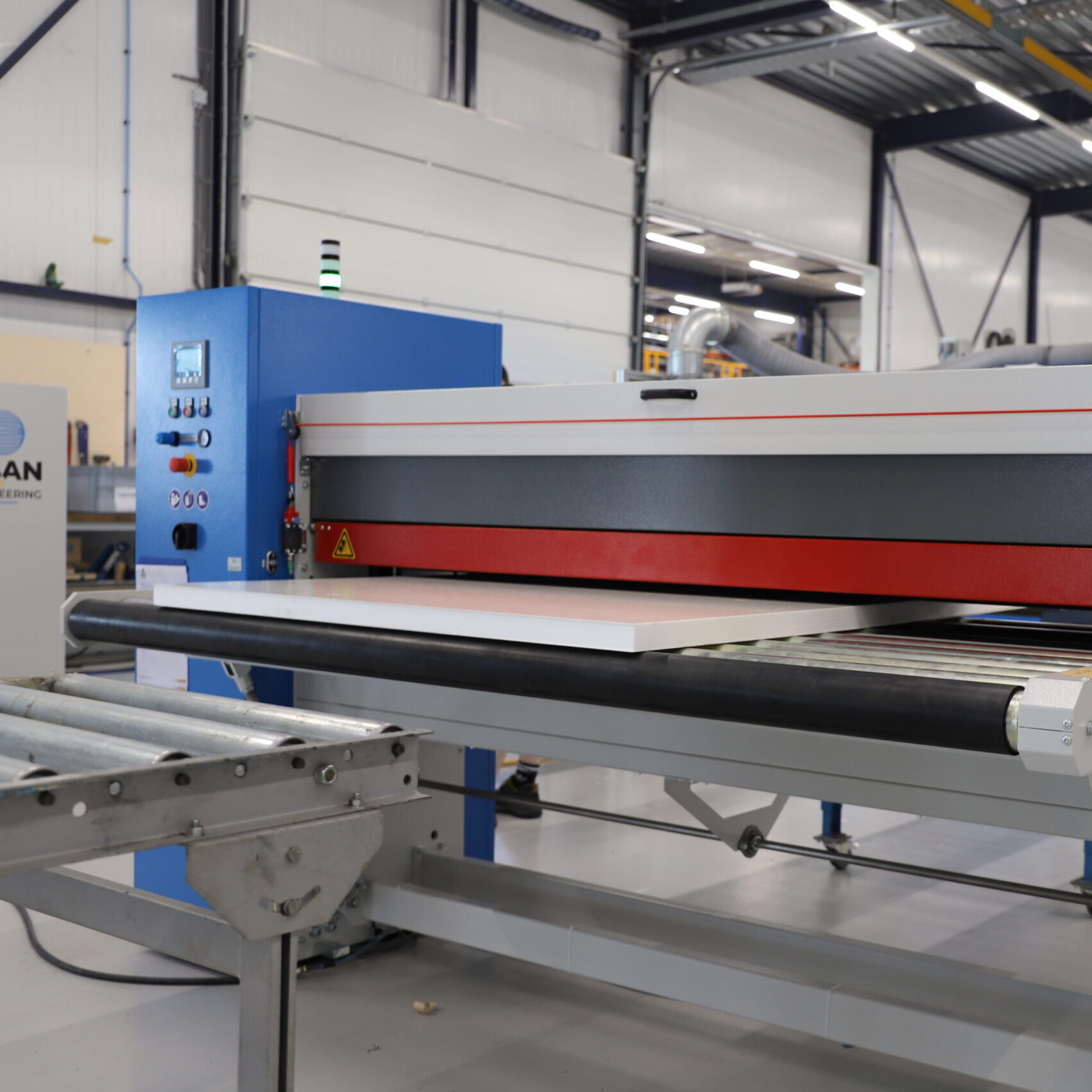
PUR hotmelt combines rapid initial adhesion with a strong final bond. This allows panels to be processed immediately, and the bonding meets the high standards of the construction sector.
PUR hotmelt bonding of construction panels offers the following advantages:
- Immediate processing after lamination
- High line speeds and greater scope for automation
- Excellent resistance to moisture and temperature
- Often lower adhesive consumption per m²
- Preservation of insulation value as the adhesive penetrates less deeply into the core
- A smooth and even bond without ‘telegraphing’ effects
Challenges in bonding construction panels
Resistance to moisture and extreme temperatures
Once installed in their final locations, such as façades, roofs and other building structures, insulation and sandwich panels are put through their paces. Frost, heat, temperature fluctuations. A strong, durable adhesive bond is, of course, crucial to the quality of your panels. We understand this better than anyone. Prevent delamination and loss of quality.
Once cross-linked, PUR hotmelt forms a durable bond that is resistant to moisture and temperatures ranging from -40°C to +150°C. This means you can assure your customers of a durable product – today and in the future.
More output without additional production space
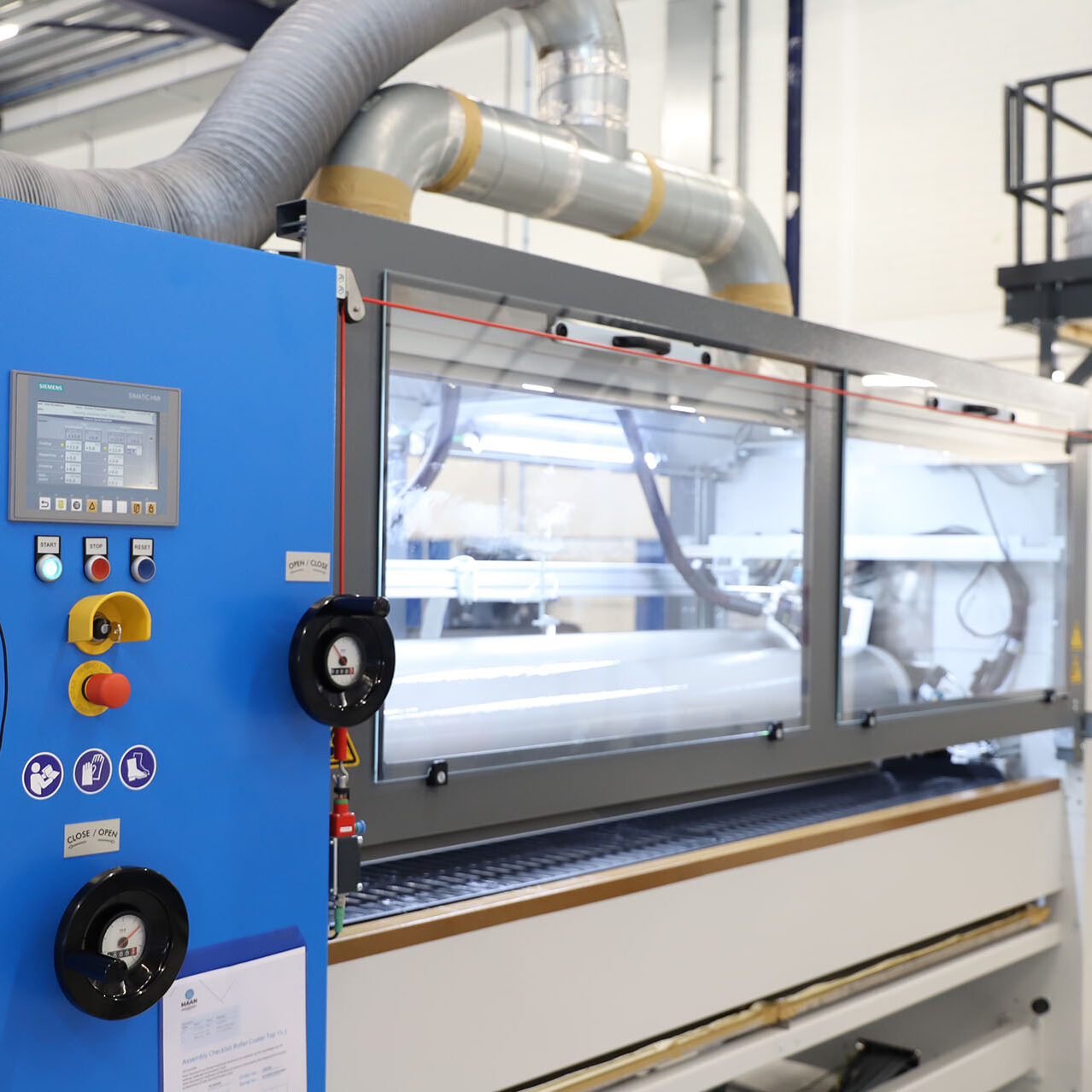
With many traditional adhesive systems, adhesive joints must first cure before they can be processed further. This requires additional handling, storage space and waiting time. PUR hotmelt offers rapid initial bonding, allowing panels to be processed immediately. This enables higher line speeds and a more efficient production process. Our coating and lamination lines are designed with this in mind, enabling higher line speeds and a more efficient production process.
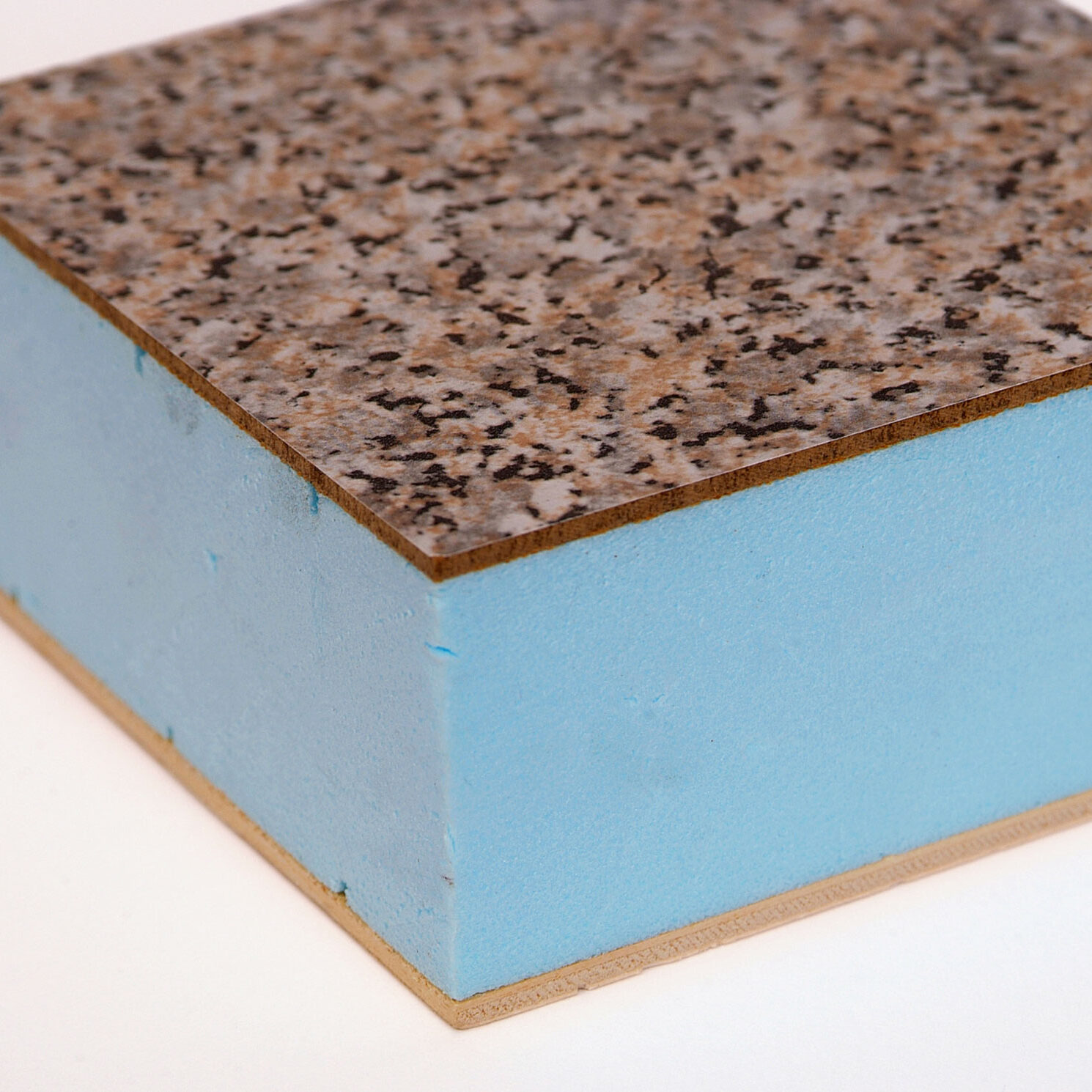
Bonding different material combinations
Building panels are often made up of combinations of materials. Each combination of materials requires a different approach to bonding and surface treatment. The following materials can be bonded using hotmelt:
- PIR
- EPS
- XPS
- Mineral wool
- MDF
- Plywood
- HPL
- Aluminium
- Steel
Do you have another material that you’d like to bond? We’d be happy to look into this with you and test how we can achieve this bond.
How we support you
A well-bonded construction or insulation panel is not determined by the adhesive alone, but is really the result of a well-coordinated process. From materials and surface treatment right through to application technology and process settings.
As every application places different demands on pressure, material behaviour and production speed, we do not supply standard solutions, but rather configurations tailored to your specific production process.
Our engineers provide advice and support with:
- Development of complete coating and lamination processes
- Material and adhesion testing
- Selection of thermoplastic or hotmelt adhesives
- Corona, primer and other surface treatments
- Process validation at our test facilities in Raalte (read more about our test facilities here)
In this way, we ensure that your building panels are not only bonded effectively, but can also be produced efficiently.

Tell us about your coating aspirations
We'll make it happen!