

Silicone coating technology
Silicone coatings play a crucial role in a wide range of release applications. From release liners for self-adhesive labels to linerless labels, tapes and industrial laminates: the performance of the end product is largely determined by an extremely thin coating layer – the release coating.
At the same time, the demands placed on release coatings are constantly increasing. Manufacturers want to use less material, achieve higher line speeds and guarantee consistent product quality. This requires control over the entire coating process: from formulation and application to curing and quality assurance.
On this page, you will discover how silicone coating works, the technological challenges involved and the developments shaping the future of release coatings.
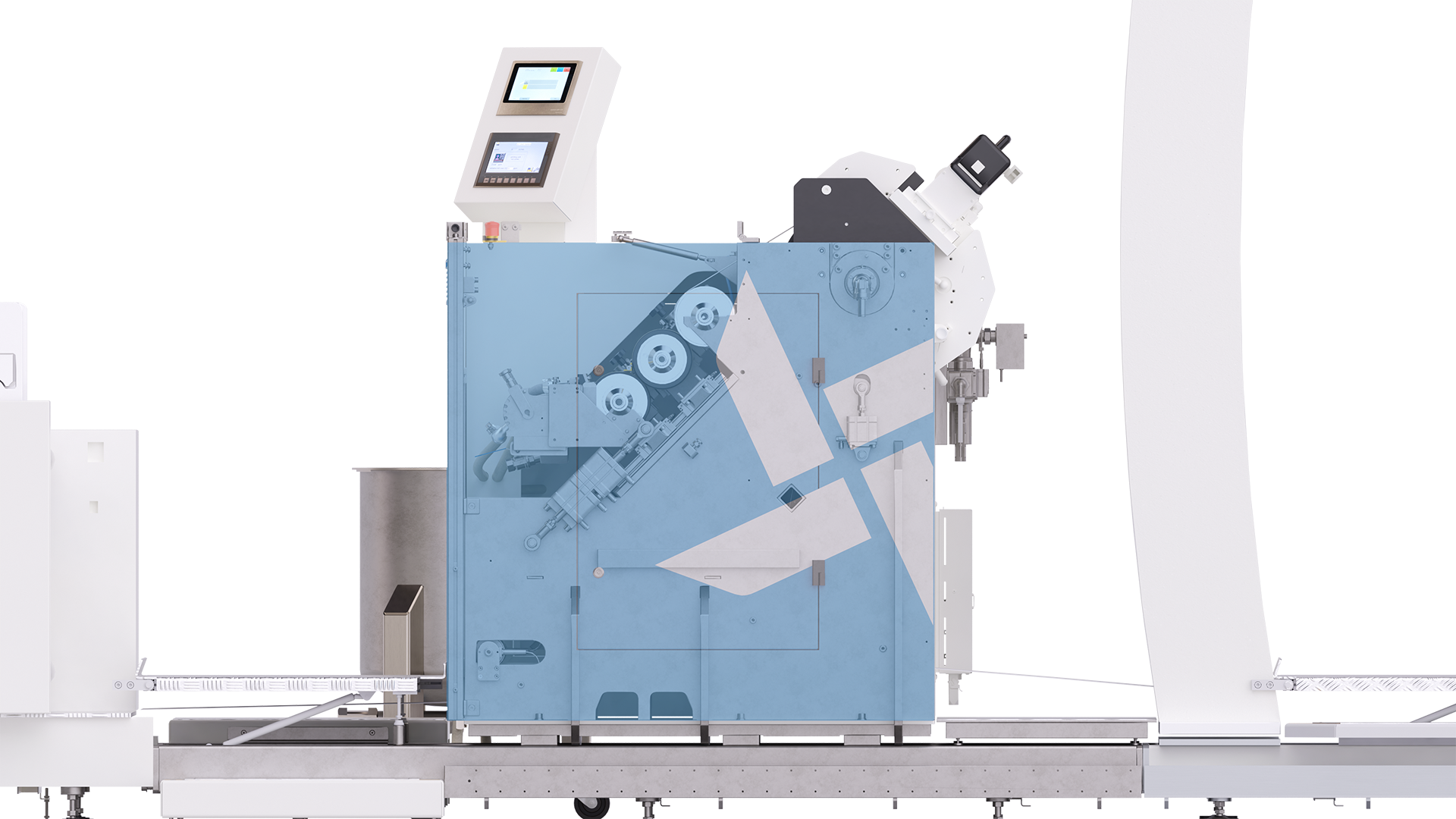
Why silicone coating?
A silicone coating is a very thin functional layer applied to a substrate such as (thermal) paper or film. The coating provides controlled release properties, enabling a self-adhesive product to be easily detached from its backing without damage or loss of performance.
Despite its minimal thickness, the coating has a significant impact on the functionality of the end product. Variations in coating weight, distribution or curing can directly lead to deviating release values and quality issues further down the supply chain.

The function of release coatings
Release liners for pressure-sensitive labels
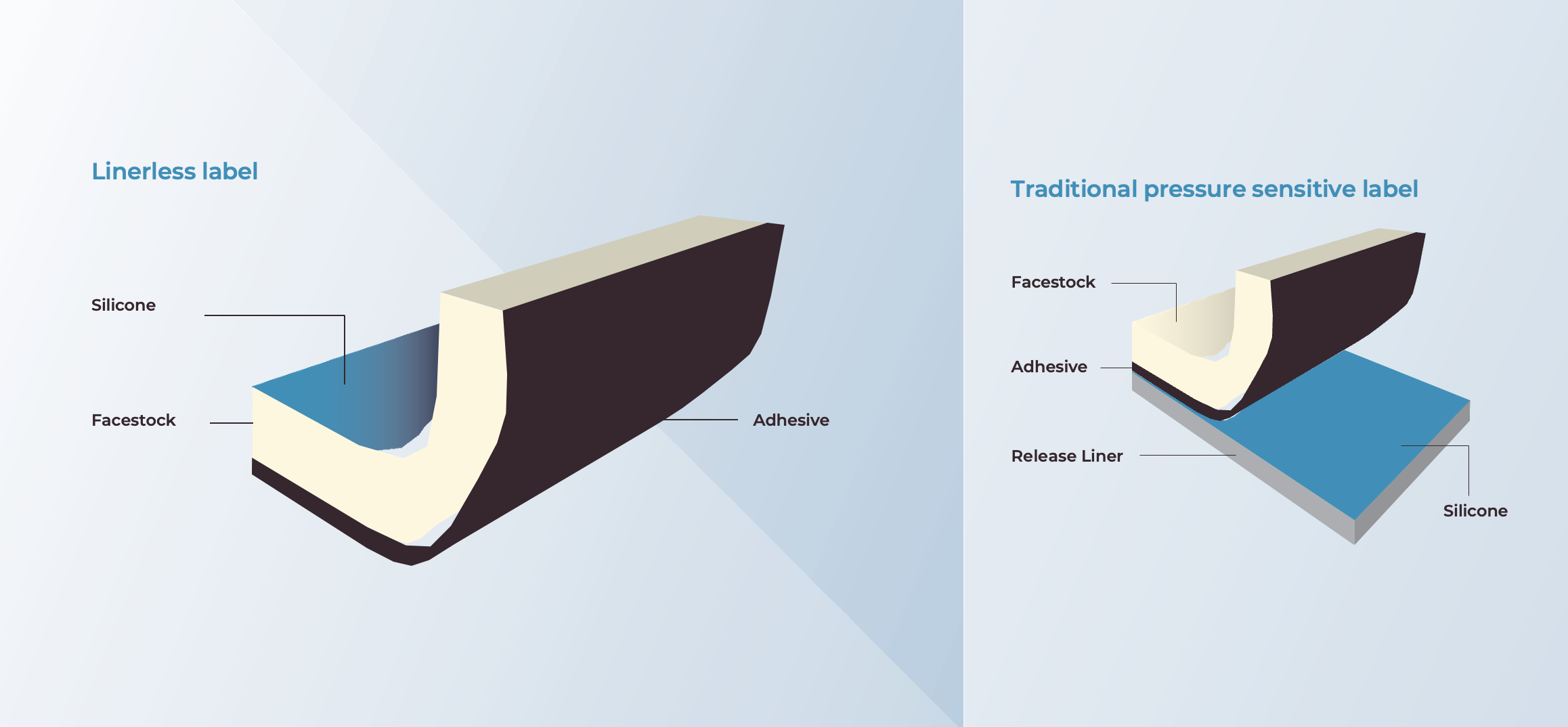
In conventional labels, the silicone coating acts as the release layer between the label and the liner. The coating ensures that labels continue to function reliably during production, transport and processing, whilst at the same time allowing them to be easily ‘released’ during dispensing.
Linerless labels
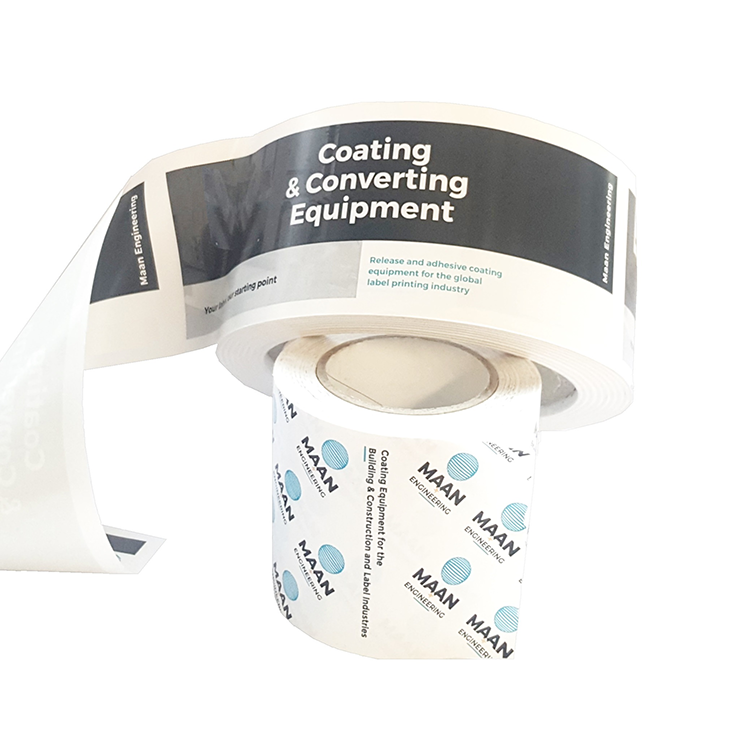
Silicone coating also plays a vital role in linerless labels. In this case, the release coating is applied directly to the face side of the label material, allowing the labels – which have no release liner – to be wound onto a roll without unwanted adhesion between successive layers.
Tapes and industrial release applications
In addition to standard blank and pre-printed label materials, silicone coatings are used in technical tapes, clear-to-clear films and various specialised labelling applications. Each application has specific requirements in terms of release force, coating uniformity and process stability.
Why silicone coating is technically demanding
Silicone coatings are among the thinnest functional coatings used in the converting industry. It is precisely for this reason that even minor variations in the process have a direct impact on the end result.
Release coatings use very low coating weights. Minimal variation can affect release performance or produce visible defects.
As coating weights continue to fall, precise dosing is becoming increasingly important. As a manufacturer, you are looking for maximum control over the amount of silicone applied to your substrate.
The performance of a coating is determined not only by the application, but also by the stability of the formulation itself. Homogeneous mixing, a consistent feed rate and control of temperature and process conditions all contribute to a reproducible result. This is because line speed, temperature and viscosity continuously influence how the silicone behaves during transfer and distribution. Optimising these parameters is essential for a stable coating process.
In UV-curing silicone systems, oxygen can disrupt the reaction at the surface. This phenomenon, known as oxygen inhibition, can affect the final release properties. Controlled curing conditions therefore play an important role in modern silicone coating lines.
Developments in silicone and curing technology
The market for release coatings continues to evolve. New formulations and curing technologies make it possible to produce more sustainably and efficiently, whilst at the same time achieving higher product performance.
Lower coating weights
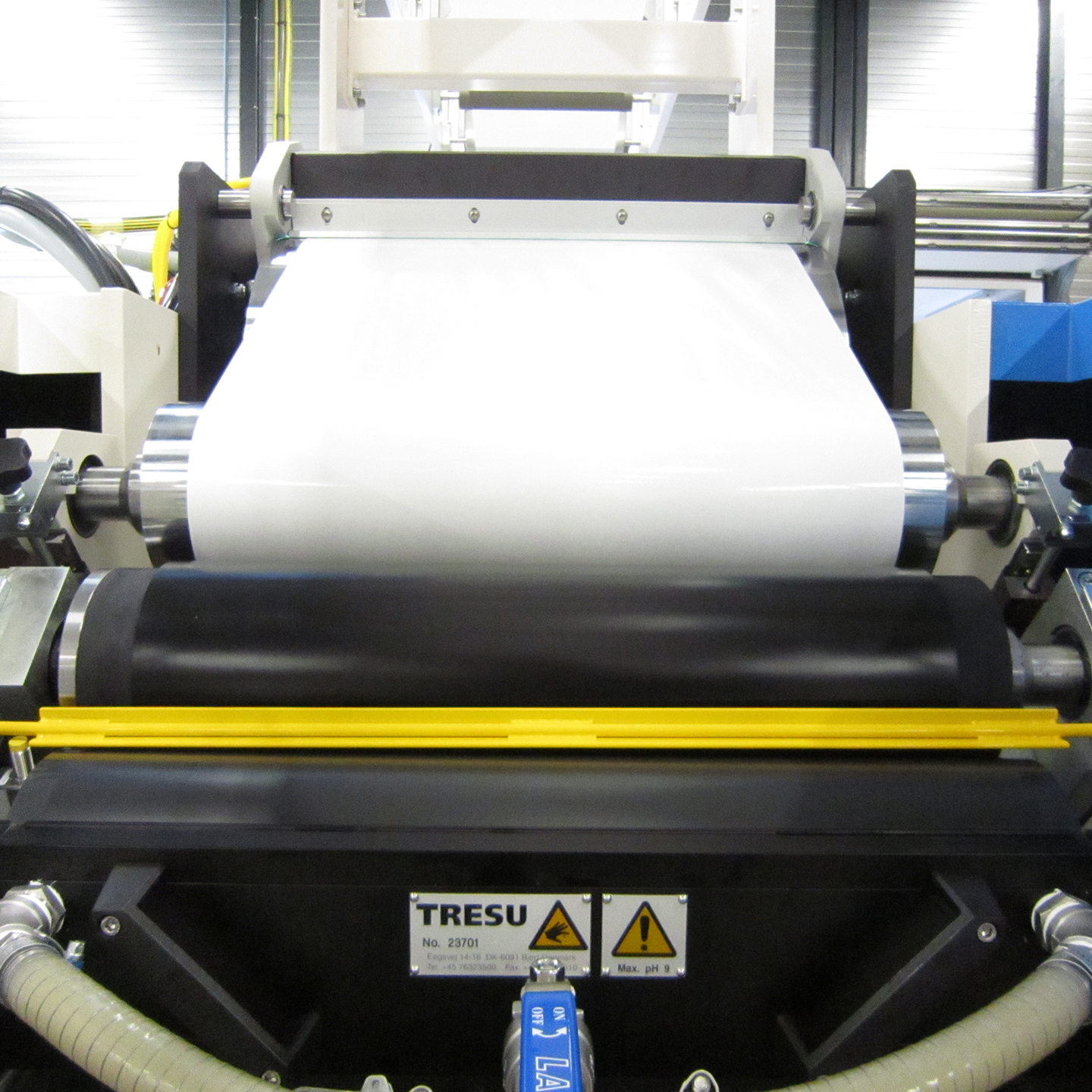
Manufacturers aim to reduce silicone consumption without compromising release performance. This requires increasingly precise coating technology.
Silicone-free release coatings
Alongside traditional silicone systems, interest in alternative release coatings is growing. These developments are driven by sustainability goals, material innovation, and specific application requirements.
Greater product variety
Shorter product runs and a greater diversity of materials call for flexible coating solutions that can be easily adapted to changing product specifications.
The increasing use of UV and LED-UV curing
UV technology is now widely accepted in release coatings. At the same time, interest is growing in LED-UV systems, which offer new possibilities in terms of energy efficiency and process control.
From technology to a controlled coating process
Successful silicone coating is not about any one individual process step. The result is determined by the interplay of formulation, feed, application, process control and curing.
That is why we develop coating solutions that bring these factors together. By providing maximum control over coating weight, coating pattern and curing conditions, we help manufacturers achieve consistent release performance, even at high line speeds and with low coating weights.
Tell us about your coating ambitions
We'll make it happen!
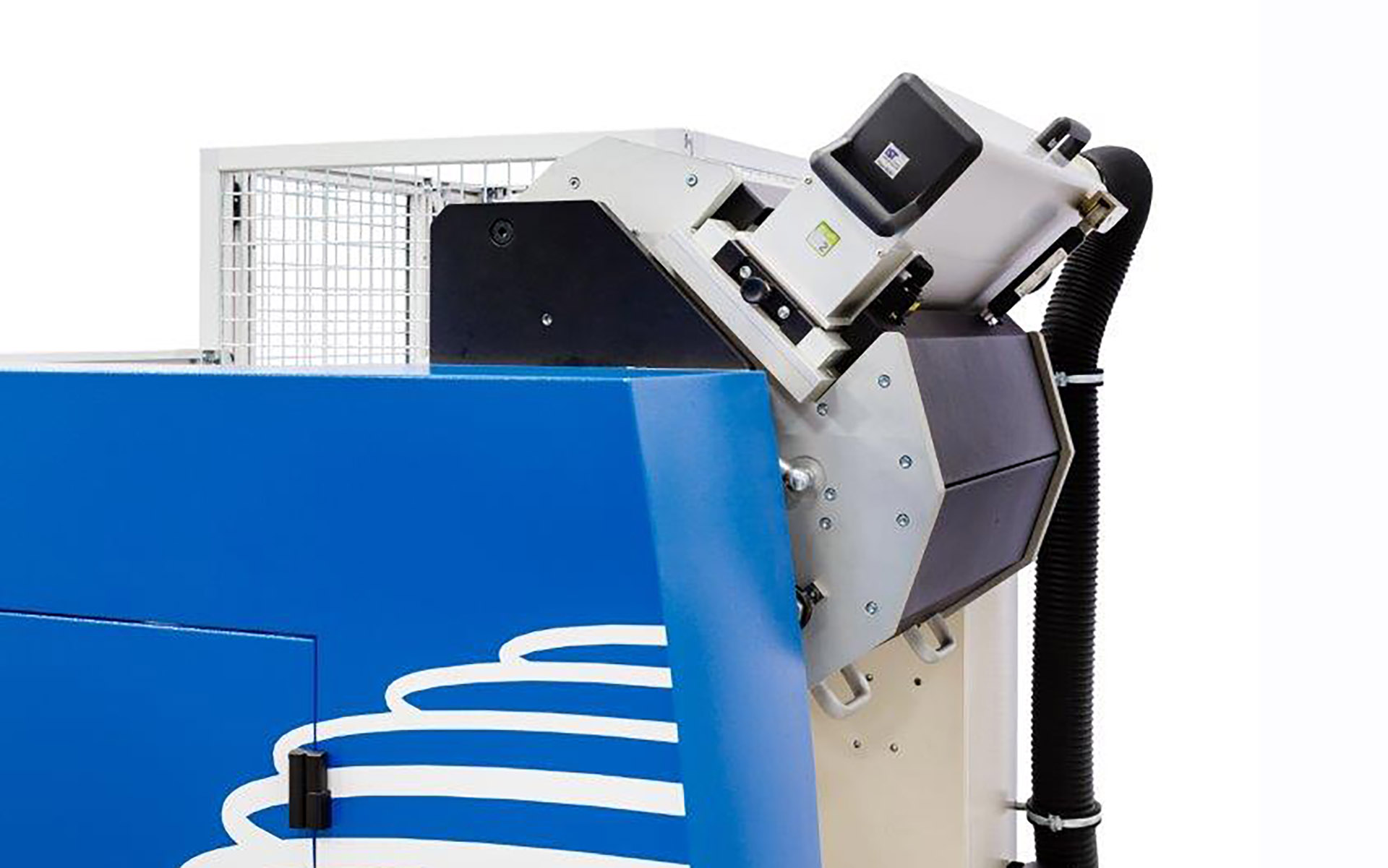
Silicone Coating Station
Do you want to know how this technology is translated into an industrial coating line?
About Maan
We develop coating equipment that adds value to your production process. We do this by prioritising efficiency, manageability and sustainability. Our systems are ‘built to last’ and designed to deliver consistent performance.
In addition, our equipment comes with Remote Access as standard. This allows our engineers to log in to the control system remotely and provide immediate assistance whenever necessary. We do everything we can to help you get the most out of your production!
Tell us about your coating aspirations
We'll make it happen!